What’s the difference between mermaid and trumpet? Is satin the same as silk? What does an illusion bodice mean?
Use the Lady Black Tie dress glossary to understand the terms you’ll see while shopping for prom dresses, cocktail dresses, wedding guest outfits, and formal gowns. Explore each category to compare designs and identify the features you love.
Designers sometimes use terms differently. Always check the individual dress’s photos, description, and size chart for its specific construction.
Dress Silhouettes
A silhouette describes the overall shape of a dress.
| Term | Meaning |
|---|---|
| A-line | A silhouette that widens toward the hem, creating an outline resembling the letter A. Many occasion styles pair this skirt with a fitted bodice. |
| Ball gown | A dress with a fitted bodice and a substantially full skirt. Layers or structured fabrics help create the volume. |
| Bodycon | A close-fitting silhouette designed to follow the body’s shape. Stretch varies by fabric and construction. |
| Column | A relatively straight, narrow silhouette with limited skirt flare. |
| Empire waist | A raised waistline positioned beneath the bust, with the skirt falling from that point. |
| Fit-and-flare | A fitted upper section that transitions into a wider skirt. The flare’s starting point varies by design. |
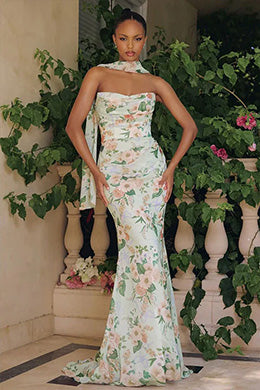
| Mermaid | A silhouette fitted through the hips and much of the legs before flaring lower down, often near the knees. |
| Sheath | A close-fitting dress with a relatively narrow skirt rather than a pronounced flare. |
| Shift | A straighter, looser shape that hangs from the shoulders with little waist definition. |
| Trumpet | A fitted silhouette that generally begins widening higher than a mermaid style, often around the thighs. Designer terminology can overlap. |
For more detail, Explore our A Guide to Dress Silhouettes
Necklines
The neckline is the shape of the garment’s upper edge around the neck, chest, and shoulders.
| Term | Meaning |
|---|---|
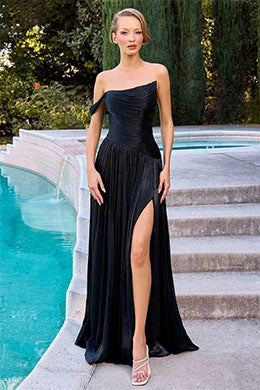
| Asymmetric neckline | An uneven neckline, often created by a one-shoulder design or diagonal edge. |
| Boat neckline / bateau | A broad, shallow neckline extending toward the shoulders. |
| Cowl neckline | Loose folds of fabric that drape across the front neckline. |
| Halter neckline | A design with fabric or straps extending toward or around the neck. Back construction varies. |
| High neckline | A neckline that sits close to the base of the neck or extends higher. |
| Illusion neckline | Sheer fabric that creates the appearance of an open neckline while providing a fabric panel. |
| Off-the-shoulder | Sleeves or bands positioned below the shoulders, leaving the shoulders exposed. |
| Plunging neckline | A neckline extending deeply down the front, sometimes with an illusion insert. |
| Scoop neckline | A rounded, U-shaped neckline. |
| Square neckline | A neckline with a broadly horizontal lower edge and more angular sides. |
| Straight neckline | A neckline running broadly straight across the front of the bodice. It may appear on strapped or strapless designs. |
| Sweetheart neckline | A curved neckline with a central dip, resembling the upper shape of a heart. |
| V-neckline | A neckline forming a V at the front or back. |
Strapless means the dress has no shoulder straps. It can have a straight, sweetheart, sculpted, or other neckline shape.
For more detail, explore our A Guide to Dress Necklines
Sleeves and Straps
| Term | Meaning |
|---|---|
| Cap sleeve | A small sleeve covering the top of the shoulder with minimal extension onto the upper arm. |
| Cold shoulder | A design with openings that expose the shoulders while retaining straps or sleeves elsewhere. |
| Flutter sleeve | A loose sleeve that falls in soft folds from the shoulder. |
| One shoulder | A design supported or framed at one shoulder, leaving the other exposed. |
| Puff sleeve | A sleeve with added volume created through gathering, fabric structure, or both. |
| Spaghetti straps | Very narrow shoulder straps. They may be fixed, adjustable, or tied. |
| Three-quarter sleeve | A sleeve ending between the elbow and wrist. |
| Bell sleeve | A sleeve that widens toward its opening. |
Dress Lengths and Skirt Details
Hem placement depends on the dress’s measurements and your height.
| Term | Meaning |
|---|---|
| Mini | A short hemline above the knee. The exact length varies. |
| Knee-length | A hem designed to fall around the knee. |
| Midi | A hem between the knee and ankle. |
| Tea-length | A length generally associated with the mid-calf area; usage varies. |
| Maxi | A long dress, usually reaching toward the ankles or floor. Maxi describes length rather than formality. |
| Floor-length | A hem designed to reach or nearly reach the floor when worn. |
| High-low hem | A hem that is shorter in front and longer behind, or otherwise varies in length. |
| Leg slit | An opening in the skirt that reveals part of the leg. Position and height vary. |
| Tiered skirt | A skirt with distinct sections or levels of fabric. |
| Train | Fabric extending behind the main hem of the dress. |
| Sweep train | A relatively short train extending slightly behind the gown. |
| Overskirt | An additional skirt layer worn or attached over the main skirt. It may be fixed or detachable. |
Dress Fabrics and Finishes
Fabric names do not always identify fiber content. For example, satin is a weave, while silk is a fiber.
| Term | Meaning |
|---|---|
| Brocade | A woven fabric with decorative patterns formed during weaving, often with a raised appearance. |
| Chiffon | A lightweight, sheer fabric commonly used for soft draping, overlays, and flowing skirts. |
| Crepe | A fabric characterized by a textured or crinkled surface. Weight, softness, and stretch vary. |
| Jacquard | Fabric with patterns woven into its structure rather than printed on the surface. |
| Jersey | A knitted fabric that often has flexibility and a fluid drape. Stretch varies. |
| Lace | An openwork fabric featuring decorative patterns. Coverage depends on the pattern and lining. |
| Mesh | Fabric with an open net-like structure, often used for illusion panels or embellishment backgrounds. |
| Mikado | A fabric commonly used in structured formalwear, typically with a substantial feel and subtle sheen. |
| Organza | A sheer fabric with a crisp feel, often used to create defined layers, ruffles, or volume. |
| Satin | A weave that typically produces a smooth face with sheen. It can be made from silk, polyester, or other fibers. |
| Silk | A natural fiber that can be used to make different fabrics, including satin and chiffon. |
| Stretch satin | Satin containing stretch fibers or made with construction that provides some flexibility. |
| Taffeta | A crisp woven fabric often used for structured shapes and defined folds. |
| Tulle | Fine net fabric used for overlays, layered skirts, and volume. Softness varies. |
| Velvet | Fabric with a raised pile that creates a soft surface and changes appearance with the direction of the pile. |
| Metallic finish | A reflective appearance produced through the fabric, threads, coating, or other treatment. |
For more detail, explore our Dress Fabric Guide.
Embellishments and Decorative Details
| Term | Meaning |
|---|---|
| Appliqué | A decorative piece attached to the surface of the fabric, often shaped as flowers or other motifs. |
| Beadwork | Decorative beads attached to fabric individually or in patterns. |
| Crystal accents | Reflective stone-like embellishments. Check the product description for the specific material. |
| Embroidery | Decorative stitching that creates patterns or designs on fabric. |
| Feather trim | Feather detailing attached to selected areas such as a neckline, sleeve, or hem. |
| Fringe | Hanging strands or strips that add movement. |
| Glitter finish | Fine reflective particles incorporated into or applied to a surface. Some finishes may shed. |
| Hot stones | Decorative stones commonly attached using heat-activated adhesive. Materials and application vary. |
| Pearl embellishments | Pearl or pearl-like details attached to the dress. The term describes decoration rather than the gown’s color. |
| Rhinestones | Decorative stones designed to create a gem-like sparkle. Material varies. |
| Rosette | A flower-like accent formed from gathered, folded, or shaped material. |
| Ruffle | Gathered or shaped fabric creating a frilled edge or decorative section. |
| Sequins | Small decorative pieces attached to fabric to create reflection or patterns. |
Bodice, Waist, and Construction
| Term | Meaning |
|---|---|
| Bodice | The upper section of a dress covering the torso. |
| Boning | Flexible or rigid strips incorporated into a garment to help maintain its shape. |
| Built-in cups | Shaped inserts within the bust area. Their coverage and support vary. |
| Corset-inspired bodice | A bodice using details associated with corsets, such as boning, shaped seams, or lacing. It does not necessarily function as a traditional corset. |
| Basque waist | A shaped waistline that dips below the natural waist, often forming a point or curved outline. |
| Drop waist | A waistline positioned below the natural waist. |
| Natural waist | The waist level around the torso’s natural indentation, generally above the hip bones. |
| Draping | Fabric arranged into folds that fall across part of the garment. |
| Pleating | Fabric folded into defined sections to create shape, detail, or controlled fullness. |
| Ruching | Gathered fabric that creates repeated folds and texture. |
| Lining | An inner fabric layer that may provide coverage, comfort, or a finished interior. |
| Overlay | An outer fabric layer placed over another material. |
| Illusion panel | A sheer section that can resemble an opening while retaining fabric coverage. |
| Lace-up back | A closure or detail using cords or ribbons threaded through loops or eyelets. Adjustability varies. |
| Low back | A back neckline that dips farther down the body. |
| Open back | Exposed areas created by an opening, cutouts, straps, or backless construction. |
| Detachable detail | A component designed to be removed, such as straps, sleeves, a bow, or an overskirt. |
For more detail, explore our A Guide to Dress Features
Occasion and Style Terms
| Term | Meaning |
|---|---|
| Cocktail dress | An occasion dress suited to many cocktail-attire or semi-formal events. Length and design vary. |
| Evening gown | A dress intended for formal evening occasions, commonly with a longer hem and more formal construction or detailing. |
| Little black dress / LBD | A black dress styled for versatile occasion wear. The term does not specify one silhouette or length. |
| Princess style | An aesthetic often associated with defined bodices, fuller skirts, and romantic details. |
| Vintage-inspired | A contemporary design drawing on features from an earlier era. It does not mean the garment itself is vintage. |
| Y2K-inspired | Styling influenced by late-1990s and early-2000s fashion, with interpretations varying by design. |
For more detail, explore our Dress Codes Explained
Use the Terms to Find Your Dress
Combine the features you love to narrow your search: a satin A-line gown, a sweetheart neckline with spaghetti straps, or a fitted dress with pearl embellishments.
Then check the product’s measurements, lining, closures, and photos. A style term helps you understand the design, but the individual construction determines how it fits and feels.
Visit our Dress Sizing Guide for measurement help and our Resource Center for neckline, silhouette, and other dress guides.
Ready to explore? Browse Prom Dresses, Cocktail Dresses, or Wedding Guest Dresses.