


Satin vs. Chiffon Bridesmaid Dresses: How to Choose
Two bridesmaid dresses can share a color and length yet create very different looks. Satin catches the light across the bodice and skirt. Chiffon adds a softer outer texture, with layers that move as the wearer walks.
Choosing between them starts with the finish you prefer, but it also involves fit, lining, construction, and the wedding setting. Here’s how to compare satin and chiffon bridesmaid dresses before your bridal party orders.
Satin vs. Chiffon at a Glance
| Detail | Satin bridesmaid dresses | Chiffon bridesmaid dresses |
|---|---|---|
| Surface | Smooth, often reflective | Sheer outer fabric with a softer appearance |
| Movement | Can drape closely or hold a structured shape | Often used in flowing skirts and layered designs |
| Color appearance | Highlights and shadows can make the shade look more varied | Layers and lining influence the finished color |
| Stretch | Depends on fiber content and construction | Depends on the complete dress, including its lining |
| Coverage | Check fabric weight and lining | Sheer chiffon generally needs lining or intentional layering |
| Comfort | Depends on cut, weight, support, and fit | Depends on cut, layers, lining, and fit |
| Care | Follow the individual garment label | Follow the individual garment label |
Neither fabric is automatically more comfortable, more formal, or better suited to every bridesmaid. Compare the complete dresses rather than choosing by fabric name alone.
What Are Satin Bridesmaid Dresses Like?
Satin describes a weave rather than a single fiber. Its smooth surface reflects light, emphasizing draping, seams, ruching, and the shape of a dress.
A structured satin gown can hold a defined bodice and fuller skirt, while a softer satin design may fall closer to the body. Stretch satin offers another option, but the amount of flexibility varies by style.
Consider Satin When You Want:
-
A light-catching finish.
-
Clean lines or pronounced draping.
-
A defined silhouette.
-
A consistent sheen across the bridal party.
Before choosing, check the fabric composition, stretch, lining, and closure. A satin dress that looks fluid in a photo may still have a firmly structured bodice.
Explore Satin Bridesmaid Dresses.
What Are Chiffon Bridesmaid Dresses Like?
Chiffon is a lightweight, sheer fabric often used over a lining. It creates a softer outer layer and is frequently used for gathered skirts, draped bodices, and flowing panels.
The outer fabric may feel airy, but comfort depends on everything underneath it. Multiple layers, a fitted lining, or a structured bodice can change how the finished dress feels.
Consider Chiffon When You Want:
-
Soft texture rather than pronounced shine.
-
Movement through the skirt.
-
Draped or gathered details.
-
A flowing element in your bridal party look.
Review the lining and skirt shape, especially if you’re choosing chiffon for a warm-weather wedding.
Browse Chiffon Bridesmaid Dresses.
Which Fabric Works Better for Your Wedding Setting?
Formal & Evening Weddings
Both satin and chiffon can suit a formal wedding. A satin gown may emphasize shape and reflective detail, while a chiffon gown can bring movement to an equally dressy silhouette.
Judge the neckline, bodice, skirt, and overall finish against the event’s formality rather than treating one fabric as inherently formal.
Garden & Outdoor Weddings
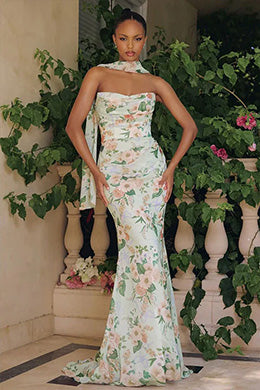
Chiffon’s flowing layers can complement a garden setting, while satin offers a more defined contrast against greenery.
For either fabric, consider the walking route, weather, hem length, and shoes. A beautiful skirt still needs to work on grass, gravel, or uneven paths.
Beach & Destination Weddings
Compare fabric weight, lining, and ease of packing. Chiffon is not automatically cooler, and satin is not automatically too heavy.
Review care instructions and plan how dresses will be transported and prepared on arrival. Your venue may also affect the choice of skirt length and train.
How Satin and Chiffon Change the Same Color
A shade can appear different across fabrics, even when the dresses use the same color name.
Satin’s reflective surface creates brighter highlights and deeper folds. Chiffon’s finished appearance depends on the outer layer, gathers, and lining beneath it.
For a closely matched bridal party:
-
Compare the specific designer, fabric, and listed color.
-
Ask about available swatches or color references.
-
Review dresses together where possible.
-
Avoid relying on screenshots taken under different lighting.
If you’re choosing black, compare Black Satin Bridesmaid Dresses with Black Chiffon Bridesmaid Dresses to see how texture changes the overall direction.
Can You Mix Satin and Chiffon Bridesmaid Dresses?
Yes. Decide whether you want the fabric contrast to be subtle or noticeable, then keep other details connected.
For example, use a defined color palette and consistent length while allowing different textures. Or choose related shades intentionally rather than expecting satin and chiffon to match exactly.
Place the proposed dresses side by side before approving purchases. Consider repeating fabrics across the group if you want the variation distributed rather than concentrated in one outfit.
Read How to Mix and Match Bridesmaid Dresses for help planning the combination.
Which Fabric Is Easier to Fit?
Fabric alone cannot answer that question. A fitted chiffon lining may allow less movement than a stretch satin skirt, while a structured satin bodice may need precise adjustments.
Compare:
-
Bust, waist, and hip measurements against the individual size chart.
-
Stretch in both the outer fabric and lining.
-
Bodice structure and support.
-
Strap and closure adjustability.
-
Room to sit, walk, and dance.
If alterations may be needed, have the specific dress assessed rather than assuming one fabric will be simpler to adjust. Our Dress Alterations Guide explains what to consider.
Caring for Satin and Chiffon Dresses
Follow the garment’s label for cleaning, pressing, and steaming. Fabric blends, embellishments, and linings can require different treatment.
Before the wedding, plan enough time to remove packing wrinkles using an approved method. For travel, protect dresses from snagging and check care needs before deciding how to pack them.
See How to Travel With Dresses for more preparation advice.
Make Your Final Choice
Choose satin if its reflective finish and the available silhouettes fit your vision. Choose chiffon if you prefer its softer texture and flowing layers. If both appeal to you, compare a small selection together before committing to a mixed-fabric palette.
Explore Bridesmaid Dresses at Lady Black Tie, and use our Dress Sizing & How to Measure Guide as you narrow down individual styles.